
LilitDer Hovanessian
Case Study 2 · Audit Tools Evolution
Making audit tools easier to start, navigate, and scale
A redesign focused on shifting from template-first forms to a clearer workflow built around tracking, structured navigation, and more usable audit experiences.
Product
QAPIplus
Industry
Healthcare / Compliance
Platform
Web (B2B SaaS)
Role
Senior Product Designer (sole designer)
Focus
Audit tools UX, navigation, workflow clarity, and scalable information architecture
Overview
Reframing audit tools around workflow, not templates
Audit Tools in QAPIplus support a range of compliance workflows, from Clinical Chart and Infection Control audits to QAPI Program reviews. As the product evolved, the experience became harder to navigate, with growing complexity across templates and custom audits.
This redesign shifted the experience from a template-first model to a workflow-first system, improving how users start, navigate, and complete audits.
Starting point & audit forms
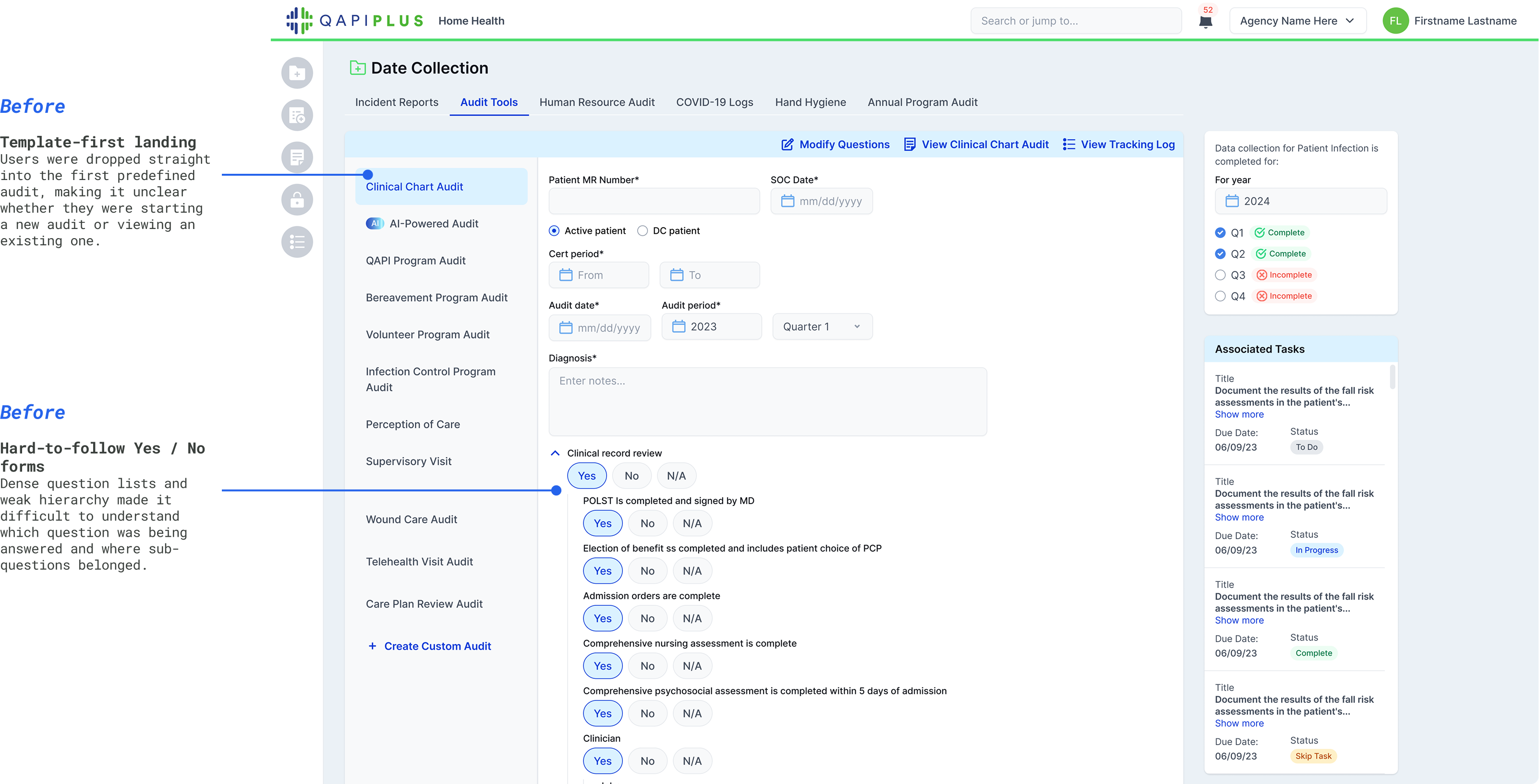
The audit experience lacked a clear starting point, and long, unstructured forms made it difficult to follow questions and maintain context.
What changed:
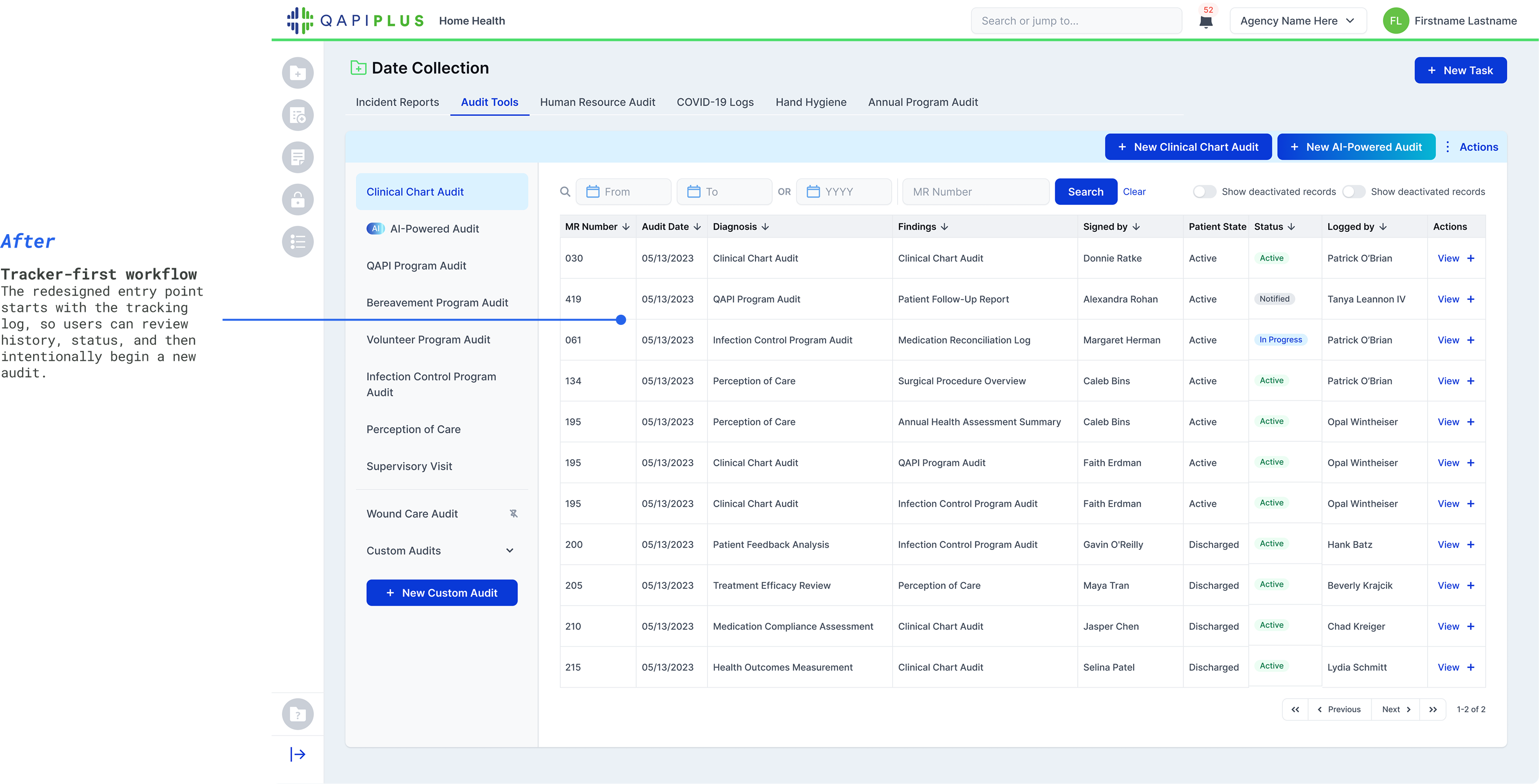
Tracker-first entry point
Users now start from a tracking view, providing context before beginning a new audit.
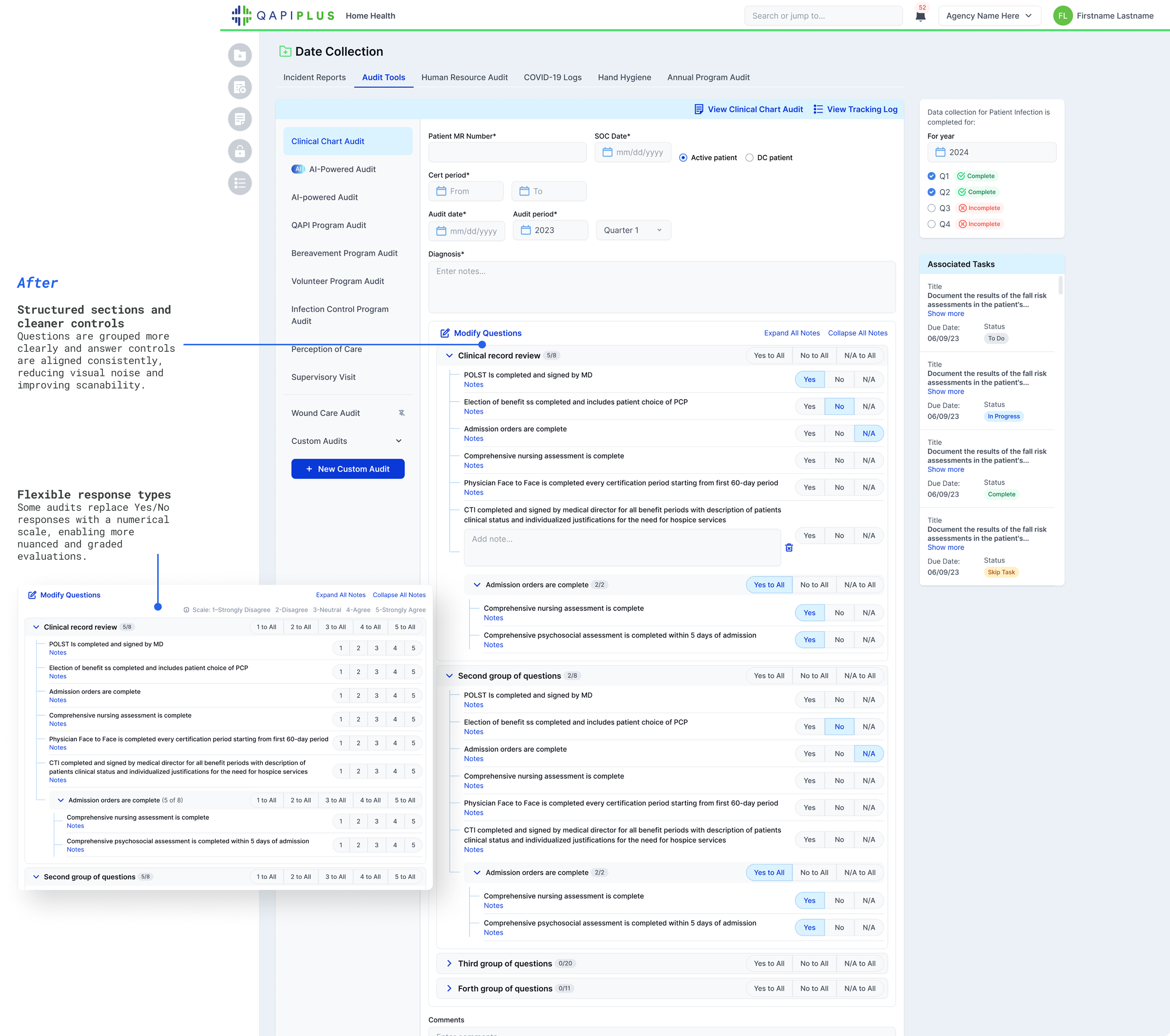
Clearer form structure
Questions are grouped into structured sections with aligned controls, improving readability and flow.
Navigation & editing workflows
Growing complexity made navigation harder to manage, while editing audits lacked clarity and structure.
What changed
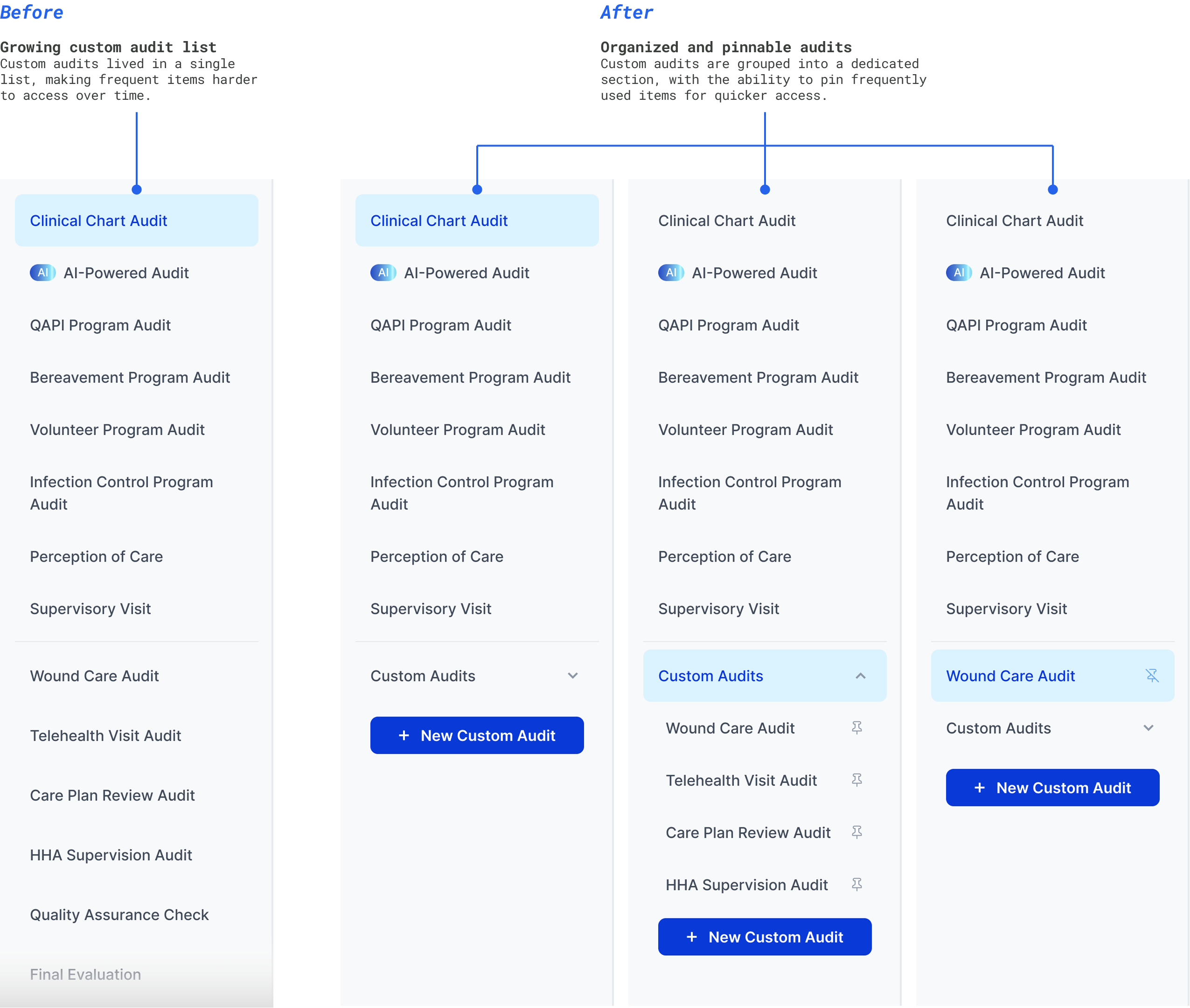
Scalable navigation
Custom audits are grouped into their own section and can be pinned, preventing the sidebar from becoming an endless scroll.
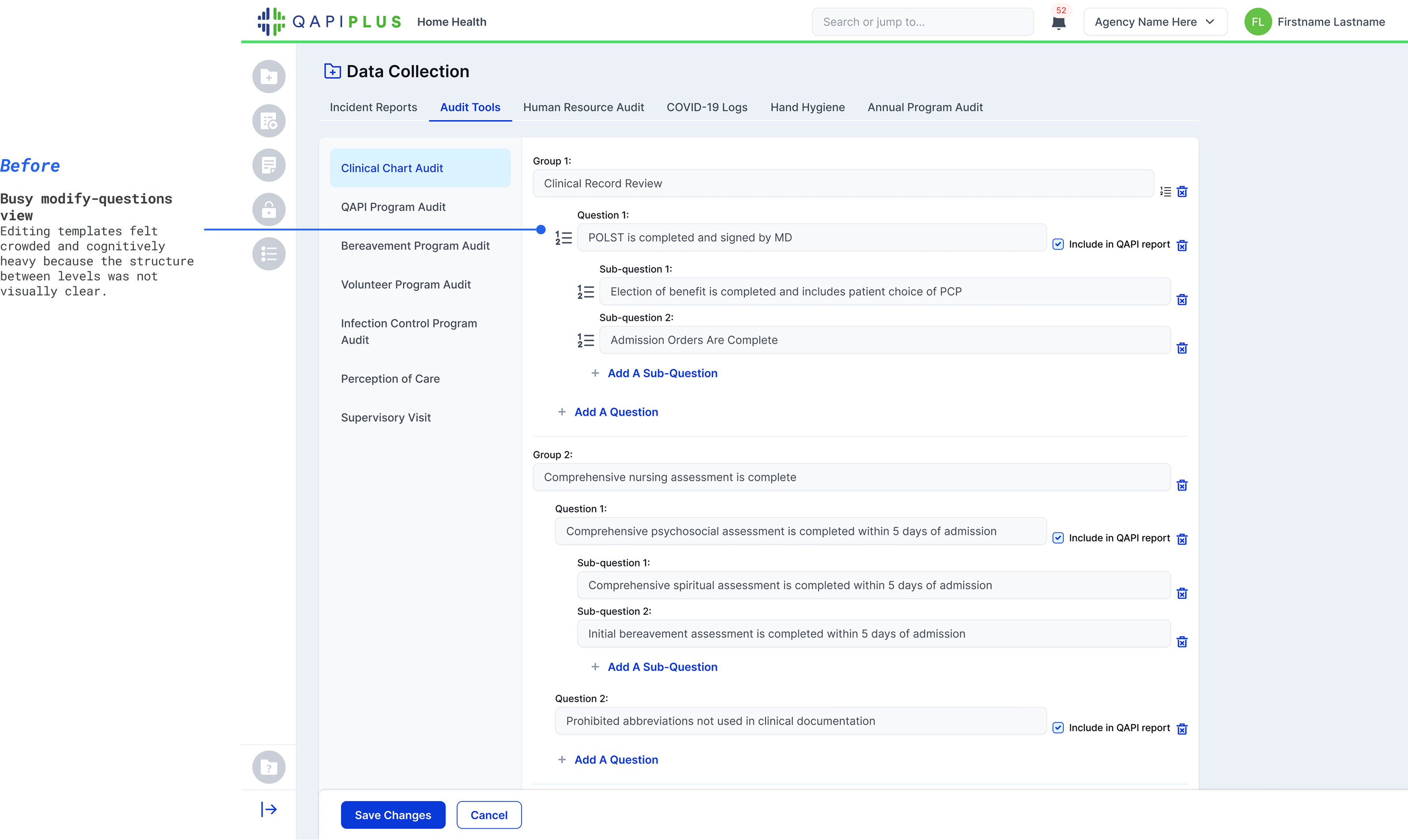
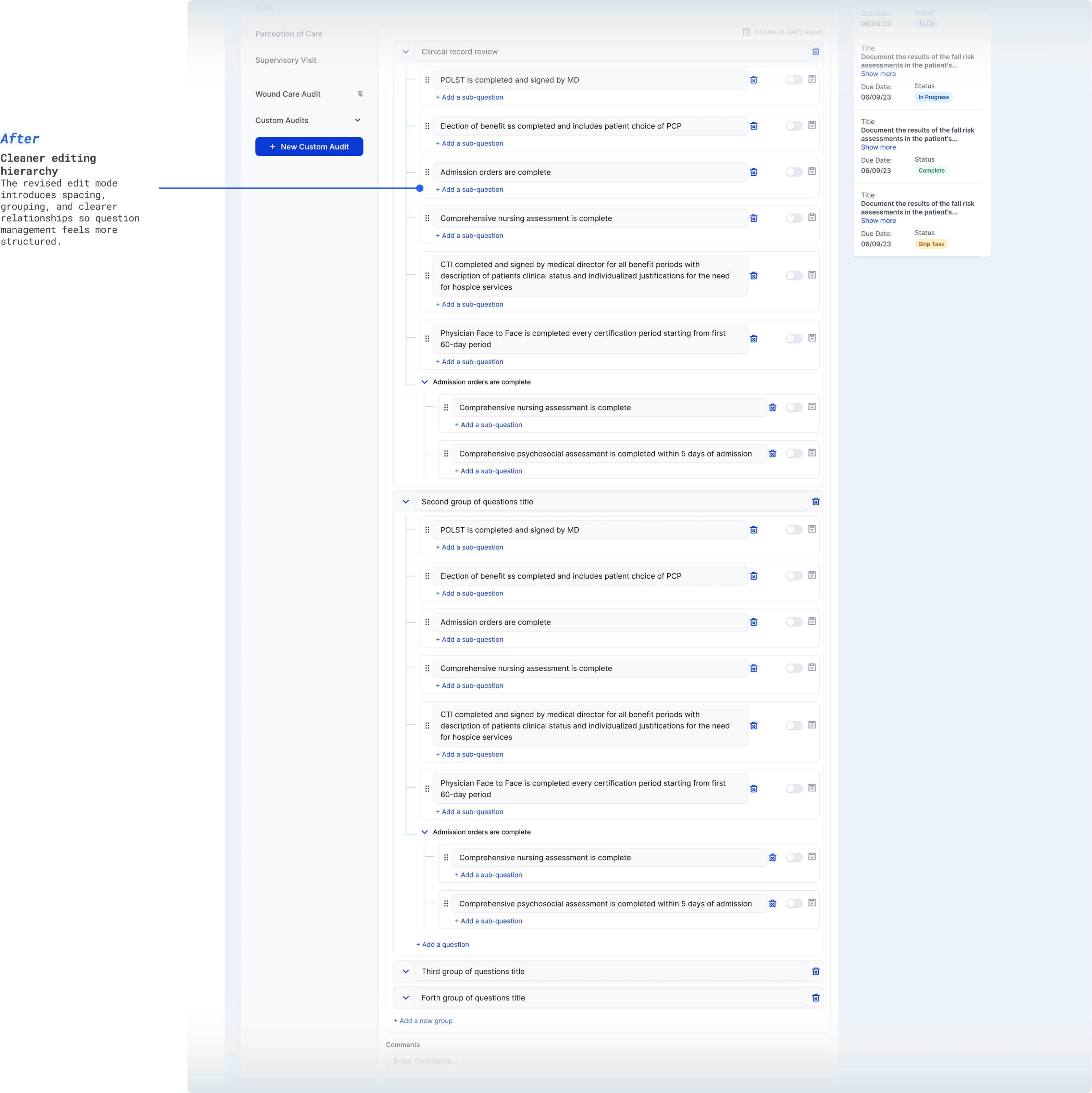
Cleaner edit mode
The question editing experience was simplified so users can understand relationships between groups, questions, and controls more easily.
The redesign transformed Audit Tools from a template-driven experience into a structured, scalable workflow that supports how users actually work.

© 2026 – Lilit Der Hovanessian
Lilit Der Hovanessian
Case Study 2 · Audit Tools Evolution
Making audit tools easier to start, navigate, and scale
A redesign focused on shifting from template-first forms to a clearer workflow built around tracking, structured navigation, and more usable audit experiences.
Product
QAPIplus
Industry
Healthcare / Compliance
Platform
Web (B2B SaaS)
Role
Senior Product Designer (sole designer)
Focus
Audit tools UX, navigation, workflow clarity, and scalable information architecture
Overview
Reframing audit tools around workflow, not templates
Audit Tools in QAPIplus support a range of compliance workflows, from Clinical Chart and Infection Control audits to QAPI Program reviews. As the product evolved, the experience became harder to navigate, with growing complexity across templates and custom audits.
This redesign shifted the experience from a template-first model to a workflow-first system, improving how users start, navigate, and complete audits.
Starting point & audit forms
The audit experience lacked a clear starting point, and long, unstructured forms made it difficult to follow questions and maintain context.
What changed:
Tracker-first entry point
Users now start from a tracking view, providing context before beginning a new audit.
Clearer form structure
Questions are grouped into structured sections with aligned controls, improving readability and flow.
Navigation & editing workflows
Growing complexity made navigation harder to manage, while editing audits lacked clarity and structure.
What changed
Scalable navigation
Custom audits are grouped into their own section and can be pinned, preventing the sidebar from becoming an endless scroll.
Cleaner edit mode
The question editing experience was simplified so users can understand relationships between groups, questions, and controls more easily.
The redesign transformed Audit Tools from a template-driven experience into a structured, scalable workflow that supports how users actually work.

© 2026 – Lilit Der Hovanessian